The Glaze Firing: Into the Fire
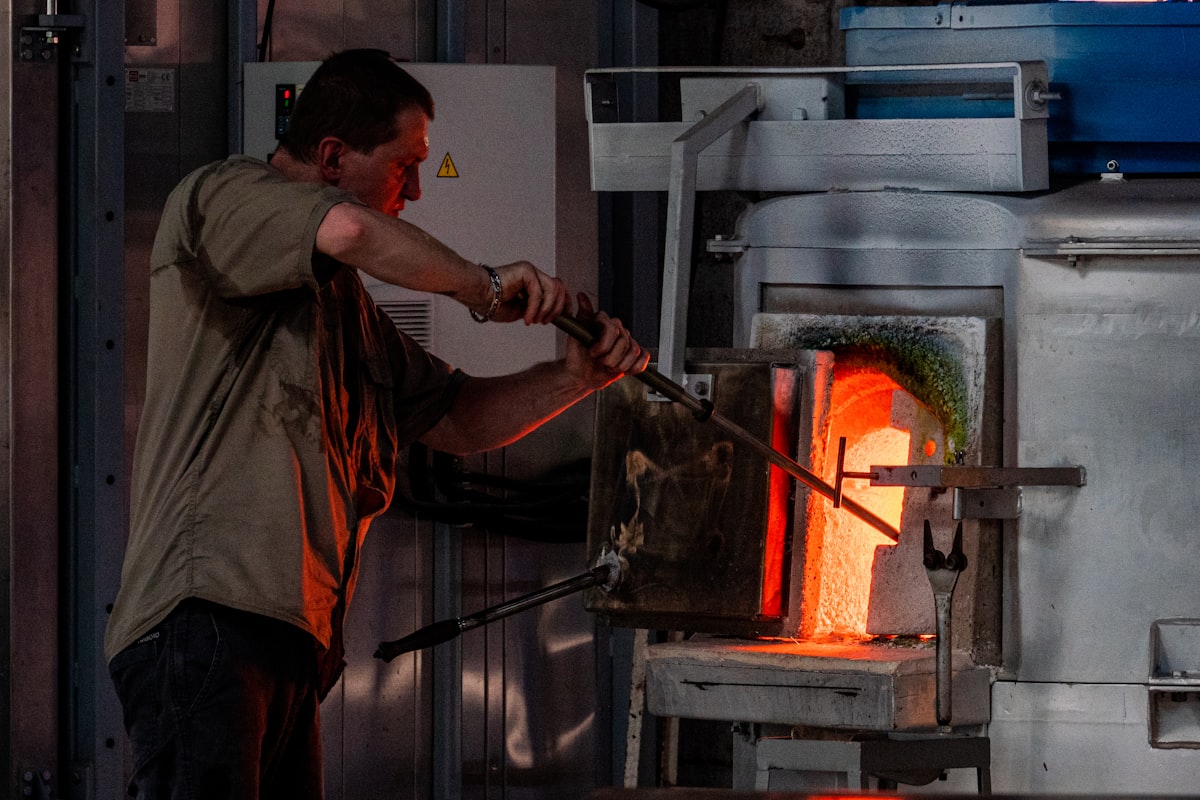
Photo: Antoine Pouligny / Unsplash
The glaze firing is the dramatic finale. Temperatures climb to a thousand degrees and beyond — high enough that the kiln glows. At the peak, the glaze melts into liquid glass and the clay body matures to its final hardness, vitrifying into stoneware that can hold water and survive daily use.
The firing must be controlled in careful stages, then cooled slowly over many hours; rush the cooling and the glaze can craze or the pot can crack. The kiln-keeper logs each step, because a single firing carries the whole studio’s work for days.
Opening a cooled glaze kiln is the most anticipated moment in pottery. The grey, chalky pieces that went in come out transformed — glossy, coloured, finished. After every hand that shaped them, the fire has the final word.