The First Firing: Bisque
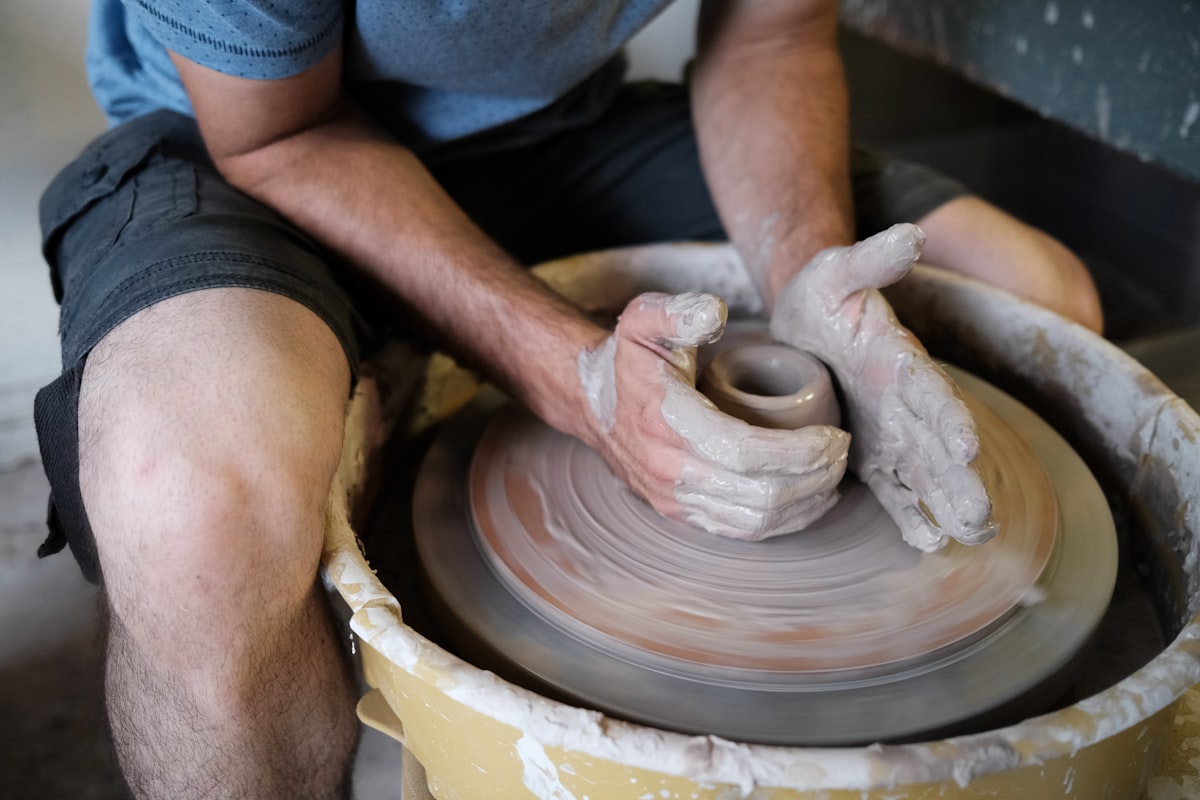
Photo: Taylor Heery / Unsplash
Most pottery is fired twice. The first firing, called bisque, takes the dried greenware to a moderate temperature and permanently hardens it. Chemically bound water is driven off and the clay particles begin to fuse — clay becomes ceramic, and there is no going back.
After bisque, a piece is far stronger but still porous, like a hard sponge. This is exactly what’s wanted: the porous surface drinks up glaze evenly in the next stage. Bisque ware is also much easier to handle without breakage.
The firing is brought up gently over many hours to avoid thermal shock, then cooled just as slowly. Opening the kiln to rows of pale, transformed pieces is the first real proof that the work has held together.